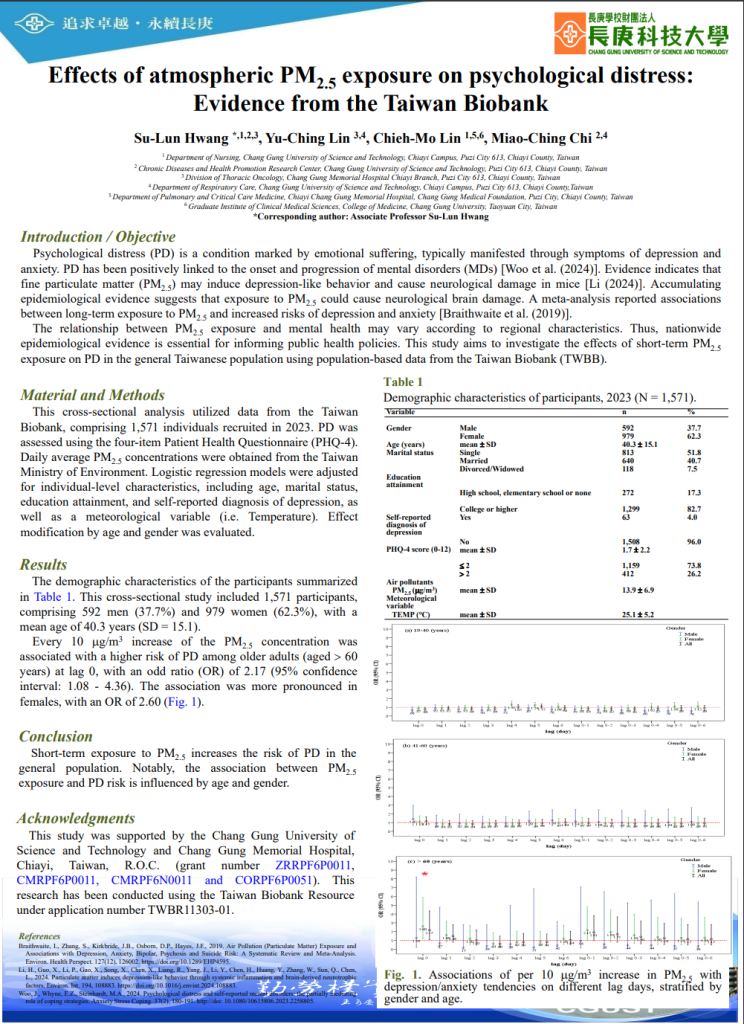
Effects of atmospheric PM2.5 exposure on psychological distress: Evidence from the Taiwan Biobank.
嘉義分部護理系黃淑倫副教授
Psychological distress (PD) is a condition marked by emotional suffering, typically manifested through symptoms of depression and anxiety. PD has been positively linked to the onset and progression of mental disorders (MDs) [Woo et al. (2024)]. Evidence indicates that fine particulate matter (PM2.5) may induce depression-like behavior and cause neurological damage in mice [Li (2024)]. Accumulating epidemiological evidence suggests that exposure to PM2.5 could cause neurological brain damage. A meta-analysis reported associations between long-term exposure to PM2.5 and increased risks of depression and anxiety [Braithwaite et al. (2019)]. The relationship between PM2.5 exposure and mental health may vary according to regional characteristics. Thus, nationwide epidemiological evidence is essential for informing public health policies. This study aims to investigate the effects of short-term PM2.5 exposure on PD in the general Taiwanese population using population-based data from the Taiwan Biobank (TWBB).